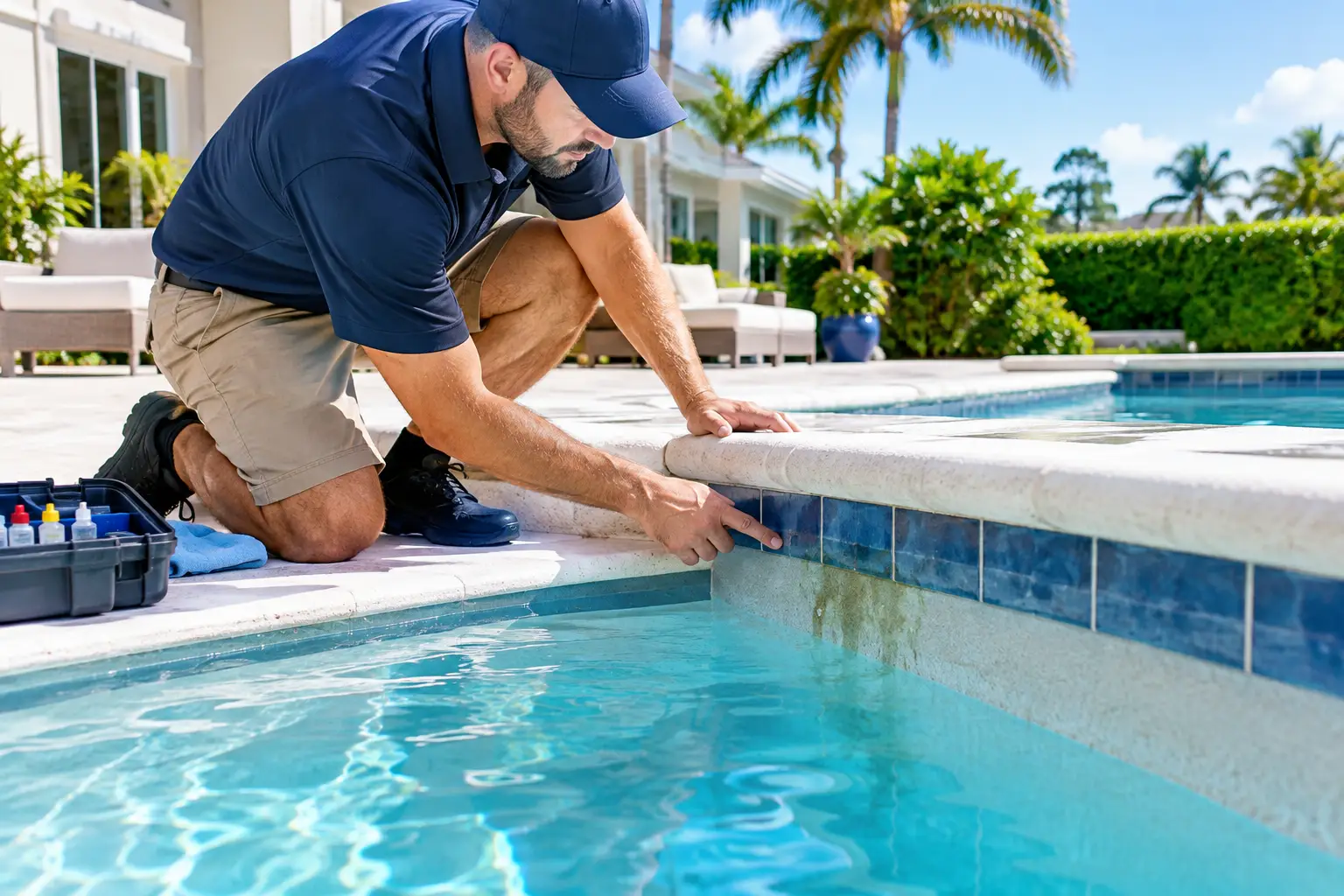
A stain can make an otherwise clear, balanced pool look neglected overnight. Effective pool stain removal is not about choosing the strongest product on the shelf. It starts with determining what caused the discolouration, because a brown leaf stain, a rust-colored metal stain, and a rough white scale deposit need very different solutions.
For homeowners, the goal is simple: restore a clean, even-looking surface without creating a bigger chemistry problem or damaging the finish beneath it. A careful diagnosis protects both the appearance of your pool and the life of its plaster, tile, vinyl, or fibreglass surface.
What Is Causing the Stain?
Pool stains are often described by color, but color alone is not a reliable diagnosis. A greenish-brown mark may come from leaves, algae residue, or copper. A reddish-orange spot could be iron, but it could also point to metal components embedded near the surface. The location, texture, and recent pool conditions tell a more complete story.
Organic stains are common in Florida pools, especially after heavy rain, wind, or a busy season of landscaping. Leaves, berries, seed pods, and other debris can settle on the floor and leave behind tannins as they break down. These stains are usually brown, green-brown, or dark purple and often appear where debris sat for a while.
Metal stains develop when dissolved metals enter the water and settle onto pool surfaces. Iron often leaves brown, orange, or rust-colored staining. Copper can create blue-green, teal, grey, or nearly black marks. Metals may enter through source water, certain chemical products, older equipment, corrosion, or a heater-related issue. If the source remains unaddressed, the stain can return even after it has been treated.
White or grey discolouration deserves close attention as well. It may be calcium scale, which feels rough and commonly appears along the waterline, on tile, and around spillways. In other cases, it may be surface etching or a finish variation rather than a removable stain. That distinction matters. Treating a damaged or worn finish as though it were a surface stain can make the appearance worse.
Why Pool Stain Removal Should Start With Testing
A pool's water chemistry and its surface condition work together. When pH, alkalinity, calcium hardness, sanitizer, and metal levels are out of range, staining and scale become more likely. Water that is too aggressive can etch plaster and expose a rougher, more porous surface. Water that is prone to scale can leave hard mineral deposits that trap dirt and discolouration.
Before recommending treatment, a pool professional should evaluate the water and inspect the affected area. The history matters too. Did the stain appear after a storm? After filling the pool? Following a heater problem, a chemical adjustment, or a period of green water? Has the pool recently been resurfaced? These details help separate a temporary surface issue from a recurring chemistry or equipment concern.
Professional spot testing can help identify whether a stain responds like an organic deposit, a metal deposit, or mineral scale. The right approach may involve correcting the water balance, using a surface-specific treatment, managing metals in the water, or addressing the source of corrosion. There is no one-size-fits-all fix, and that is good news: a targeted plan is usually safer and more effective than repeated guessing.
Common Stain Types and the Right Response
Organic debris and algae residue
When leaves or other debris leave a mark, improving circulation, brushing, filtration, and sanitizer control may be part of the answer. In some cases, a carefully selected treatment helps lift the stain after the water has been brought back into balance. If algae was present, the pool also needs a complete recovery plan so the visible stain is not confused with an ongoing water-quality problem.
Metal staining
Metal stains call for extra care. Simply adding more chlorine or aggressively scrubbing may not remove them and can sometimes deepen the discolouration. A proper treatment may include removing or managing metals in the water, rebalancing chemistry, and investigating where those metals came from. If corrosion from equipment is suspected, that should be evaluated rather than covered up with a cosmetic treatment.
Calcium scale and waterline buildup
Scale is a mineral deposit, not a typical stain. It can feel gritty or rough and may become more visible as water evaporates and minerals concentrate around the waterline. The best response depends on the surface material and the severity of buildup. Light deposits may be manageable with routine professional cleaning and balanced water. Heavy scale may require more specialised service, especially on delicate tile, stone, or aging finishes.
Surface wear, mottling, and etching
Not every uneven area can be removed. Plaster can develop mottling, etching, spotty discolouration, and age-related variations that are part of the finish itself. A pool inspection can clarify whether cleaning or stain treatment is realistic, or whether the surface needs a different long-term plan. Honest expectations matter here. A good service provider should explain what can improve and what may remain visible.
Avoid the Fast Fix That Creates a Bigger Problem
It is tempting to use a strong acid, abrasive tool, or random chemical remedy after spotting an unsightly mark. That can be risky. Harsh products can alter water chemistry quickly, damage finishes, fade vinyl liners, harm nearby landscaping, or create unsafe handling conditions. Aggressive brushing can also scar certain surfaces while doing little to resolve the actual cause.
Acid washing is sometimes appropriate for specific plaster-surface conditions, but it is not routine cleaning and it is not the answer to every stain. It removes a very thin layer of plaster along with discolouration, so repeated or unnecessary acid washing can shorten the life of a pool finish. The decision should follow a close assessment of the surface, stain type, and overall condition of the pool.
The same principle applies to metal treatments. Removing a visible stain without controlling metal levels or correcting the source can lead to a frustrating cycle of repeat staining. The best result is not just a brighter surface this week. It is a pool that stays safe, balanced, and truly clean over time.
Preventing Stains Between Service Visits
Consistent maintenance is the most practical form of stain prevention. Skimming debris before it settles, maintaining dependable circulation, brushing surfaces, and keeping chemistry in range all reduce the conditions that allow stains and scale to form. A clean filter and properly operating equipment also help keep water moving and contaminants from lingering in one area.
Homeowners can help by keeping an eye out for changes rather than waiting until a small mark becomes widespread. Take note if you see new rust-colored spots, a recurring ring at the waterline, green or teal staining, rough patches, or sudden discolouration after adding water. A clear photo and a brief description of when the issue appeared can help your pool professional assess it more efficiently.
For newly filled, resurfaced, or recently recovered pools, chemistry management is particularly important. Fresh surfaces and changing water conditions can be more vulnerable to staining, scaling, and uneven appearance during the early stages. A structured start-up process gives the surface and water the attention they need from day one.
When It Is Time to Call a Pool Professional
A single small mark after a leaf falls in may be straightforward. Widespread staining, recurring rust-colored spots, rough scale, stains that return after treatment, or discolouration paired with equipment concerns deserve professional attention. The same is true when you are unsure what type of surface your pool has or whether a treatment is safe for it.
For homeowners in Wellington, Westlake, Royal Palm Beach, Loxahatchee, The Acreage, Avenir, Greenacres, and The Club at Ibis, Turtle Pool Care can assess the stain in the context that matters most: your water chemistry, pool finish, equipment condition, and maintenance history. Clear answers and careful treatment are the best way to bring back the look you want while protecting the pool you rely on for family time and peace of mind.
A stain does not have to become a permanent eyesore. Catch it early, identify it correctly, and let the condition of the water and surface guide the next step.