A white crust at the waterline, rough-feeling plaster, or cloudy water can start with one quiet chemistry issue: calcium hardness. To balance pool calcium hardness correctly, homeowners need more than a single test result. The pool surface, water temperature, pH, alkalinity, sanitizer type, and even evaporation all affect whether calcium stays where it belongs - dissolved in the water rather than attaching itself to your pool and equipment.
In western Palm Beach County, warm weather and frequent evaporation can make this a moving target. A little regular attention helps protect the finish you see, the heater and salt system you may not see, and the comfortable swimming water your family enjoys.
What calcium hardness means in pool water
Calcium hardness measures the amount of dissolved calcium in pool water, usually reported in parts per million, or ppm. Calcium is naturally present in water, and a certain amount is helpful. The goal is not calcium-free water. The goal is water that is balanced enough not to pull minerals from a pool surface or leave excess minerals behind as scale.
When calcium hardness is too low, water can become aggressive. In a plaster, pebble, or other cement-based finish, that water may draw calcium from the surface. Over time, this can contribute to etching, roughness, discoloration, and premature surface wear. Low calcium can also be hard on metal components.
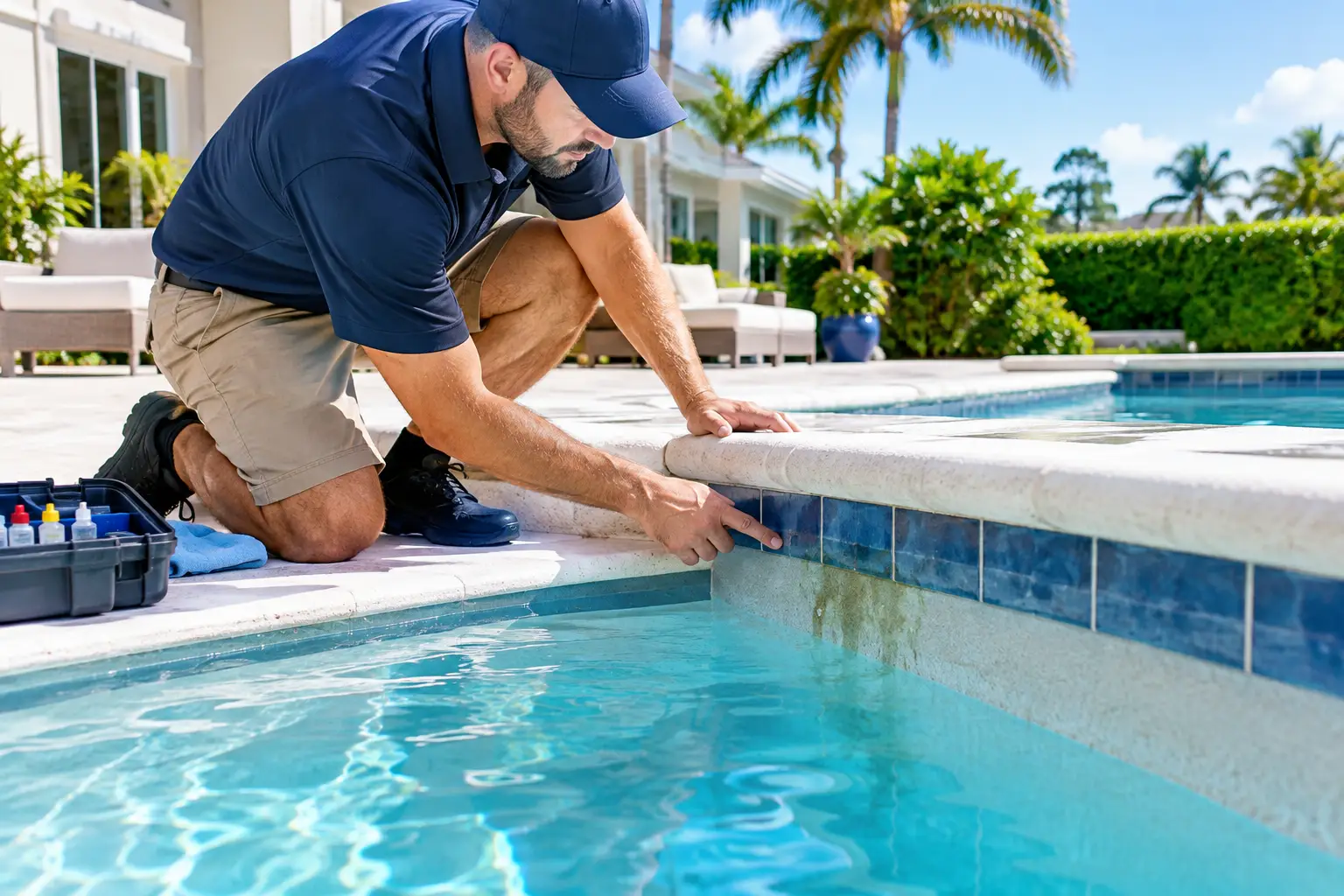
When calcium hardness is too high, the water has more calcium than it can comfortably hold under current conditions. The excess can form scale on tile, inside pipes, on a heater heat exchanger, and on salt cell plates. Scale often looks white or gray, but it can also feel like a rough film. Left alone, it can reduce circulation, interfere with heating, and make cleaning more difficult.
The right range depends on your pool
There is no one calcium hardness number that fits every backyard pool. As a general starting point, many plaster and concrete pools are maintained around 200 to 400 ppm. Fiberglass and vinyl-lined pools often work well at lower levels, commonly around 150 to 250 ppm.
Those ranges are useful, but they are not the whole decision. A pool with a high pH, warm water, and elevated total alkalinity can scale even when its calcium result is technically within range. Conversely, a slightly lower calcium result may be less concerning when the rest of the water chemistry supports it.
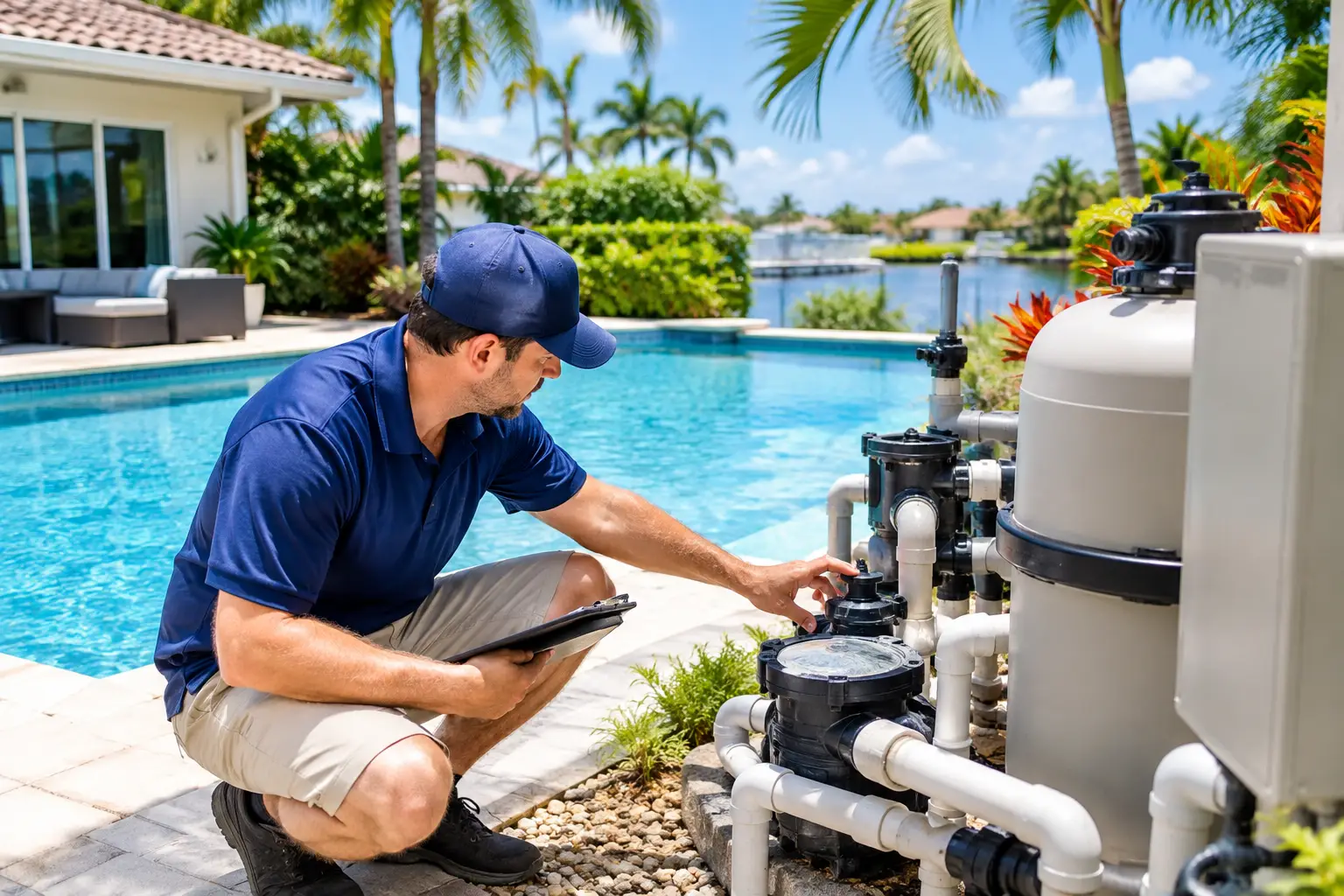
That is why experienced pool care looks at the water as a system. Calcium hardness should be considered alongside pH, total alkalinity, cyanuric acid, water temperature, and total dissolved solids. For saltwater pools, manufacturer guidance for the salt chlorine generator also matters. Some systems have specific calcium recommendations to help limit buildup on the cell.
Why Florida pools can develop high calcium hardness
Calcium does not evaporate, but pool water does. Each time water evaporates, the dissolved minerals remain behind. Refill water adds more minerals, and the concentration gradually rises. In a warm climate where pools run year-round, this is a common reason calcium hardness creeps upward over time.
Splash-out, rain, leaks, and partial draining can change the picture in the other direction, but evaporation is usually the stronger force. Water features and spillovers can accelerate it because they expose more water to air. If a pool is heated regularly, its warmer water can also be more prone to scaling when other balance factors are off.
Newly resurfaced pools require especially careful monitoring. Fresh plaster and similar finishes go through a curing period, and the water chemistry needs structured attention to support that process. A proper startup plan is not simply a standard weekly chemical visit with a different label.
Signs your calcium hardness may be out of balance
A professional water test is the best way to confirm calcium hardness, but your pool may offer clues before the numbers are checked. Scaling commonly shows up as a stubborn white ring around the tile line, rough deposits on fittings, or a flaky buildup inside a salt cell. Cloudy water can also occur when calcium comes out of solution, although poor filtration, algae, or other chemistry issues can cause cloudiness too.
Low calcium is less obvious in the short term. Plaster may begin to feel rough or look dull, mottled, or etched. Grout and cement-based surfaces can lose their smooth appearance. These symptoms can overlap with age, staining, or improper pH management, which is why guessing from appearance alone is risky.
A single reading should never lead to a rushed correction. Confirm the test, review recent chemical additions and water loss, then evaluate the whole balance picture. This avoids fixing one number while creating a new problem somewhere else.
How to balance pool calcium hardness without overcorrecting
If calcium hardness is low, the usual correction is a calcium hardness increaser, commonly calcium chloride. It should be measured carefully and added according to the product instructions, with circulation operating. Large corrections are better handled in stages because water chemistry can shift quickly, particularly in smaller pools or pools with a new finish.
Avoid tossing dry chemicals into a skimmer, mixing different pool chemicals together, or making major adjustments based on an old test strip. Chemical handling deserves care. If you are unsure about the product, dose, or order of adjustment, it is safer to have a pool professional test the water and make the correction.
High calcium hardness takes more patience. There is no simple chemical that reliably removes calcium from pool water without introducing other complications. Depending on the severity, the pool type, and the water condition, partial drain-and-refill dilution may be the practical answer. That decision should account for local conditions, the pool finish, groundwater concerns, and current water chemistry.
Sometimes the immediate priority is not lowering the calcium number itself. Bringing pH and total alkalinity into a better range can reduce the tendency for scale to form while a longer-term plan is made. If existing scale is already present, it may require targeted cleaning or service rather than more chemical adjustments.
Keep pH from pushing calcium out of solution
High pH is one of the most common partners in a scaling problem. When pH rises, calcium is more likely to deposit on tile, equipment, and interior surfaces. This is particularly relevant in saltwater pools, where the chlorine-generation process can encourage pH to drift upward.
Keeping pH in its recommended operating range does not replace proper calcium management, but it makes the calcium level easier to manage. It also helps protect swimmer comfort, sanitizer performance, and equipment. The same is true for total alkalinity: it acts as a pH buffer, but an excessively high level can make pH difficult to control.
A practical testing schedule for homeowners
Weekly water testing should include calcium hardness as part of a complete chemistry review, especially for plaster pools, saltwater pools, heated pools, and pools with visible scale. At minimum, calcium deserves a closer look after substantial evaporation, a major refill, heavy rainfall, a resurfacing project, or unexplained heater or salt cell buildup.
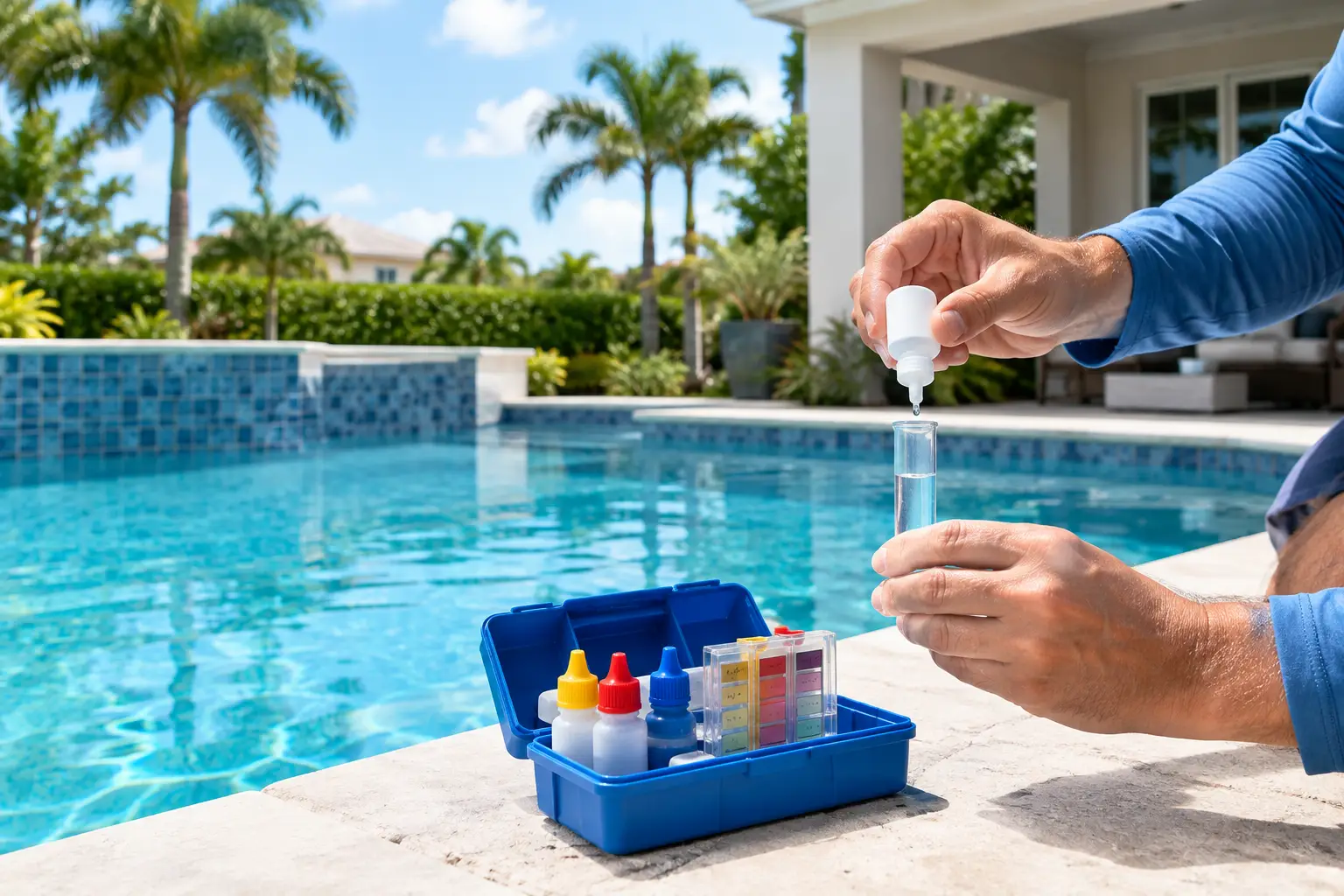
Home test kits can be helpful for keeping an eye on trends, but reliable drop-based testing and professional evaluation offer more confidence when readings are near a correction point. A detailed service report also gives homeowners a useful record of what changed, what was added, and why.
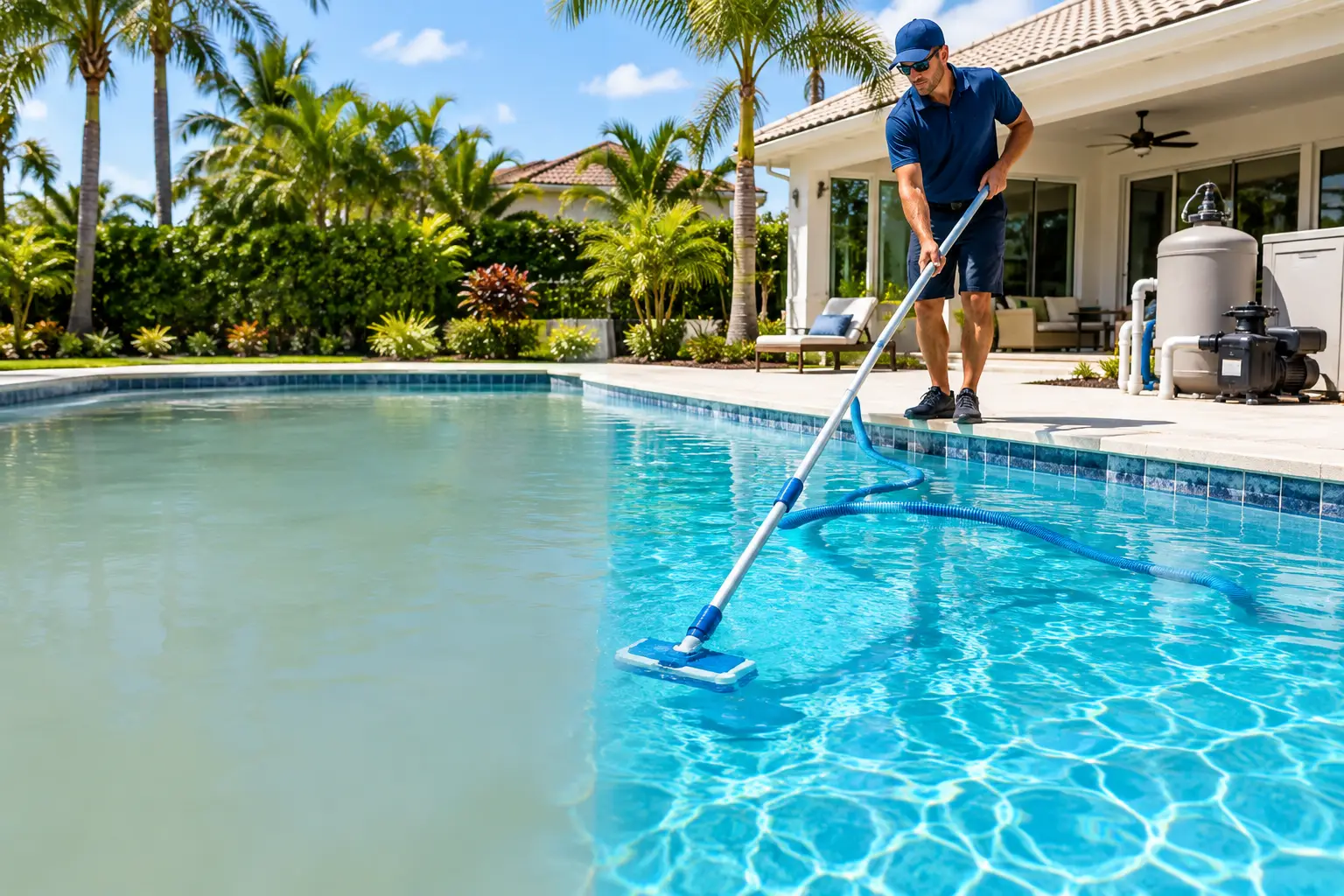
For regular pool service, this is where consistency pays off. Turtle Pool Care tests and balances water as part of dependable weekly residential care, then documents completed work with digital reports and photos. That creates a clearer chemistry history than trying to reconstruct a problem months after scale or surface damage has appeared.
Protecting the pool beyond the test result
The best way to manage calcium hardness is to prevent extremes from becoming routine. Maintain a stable water level, address leaks promptly, keep circulation and filtration working properly, and avoid treating chemistry as a collection of unrelated numbers. A clean filter cannot solve scaling water, and the correct calcium level alone cannot compensate for neglected pH or alkalinity.
If your tile is becoming rough, your heater is behaving differently, or your pool has recently been resurfaced, ask for a full water-balance review rather than a quick calcium adjustment. A few careful decisions now can keep the water clear, the equipment cleaner, and your pool feeling turtly clean for the next swim.